What is a Dissernet? Dissernet began in 2011-2012, when it became clear that corruption was flourishing in Russian scientific circles. Dissertations are sold and bought “turnkey”: paying a round sum, the client receives not only the finished work, but also a guarantee of successful defense, approval of the Higher Attestation Commission, and finally a crust. I fell asleep as a candidate and woke up as a doctor of science. This corruption chain goes to the very top. And, most importantly, these are not original dissertations. Often they are written off from the first to the last line, only the title page and the author’s name are replaced. This is not just a Russian phenomenon. This is a global problem, but in Russia it has taken on an outstanding scale-directly proportional to the scale of overall corruption.
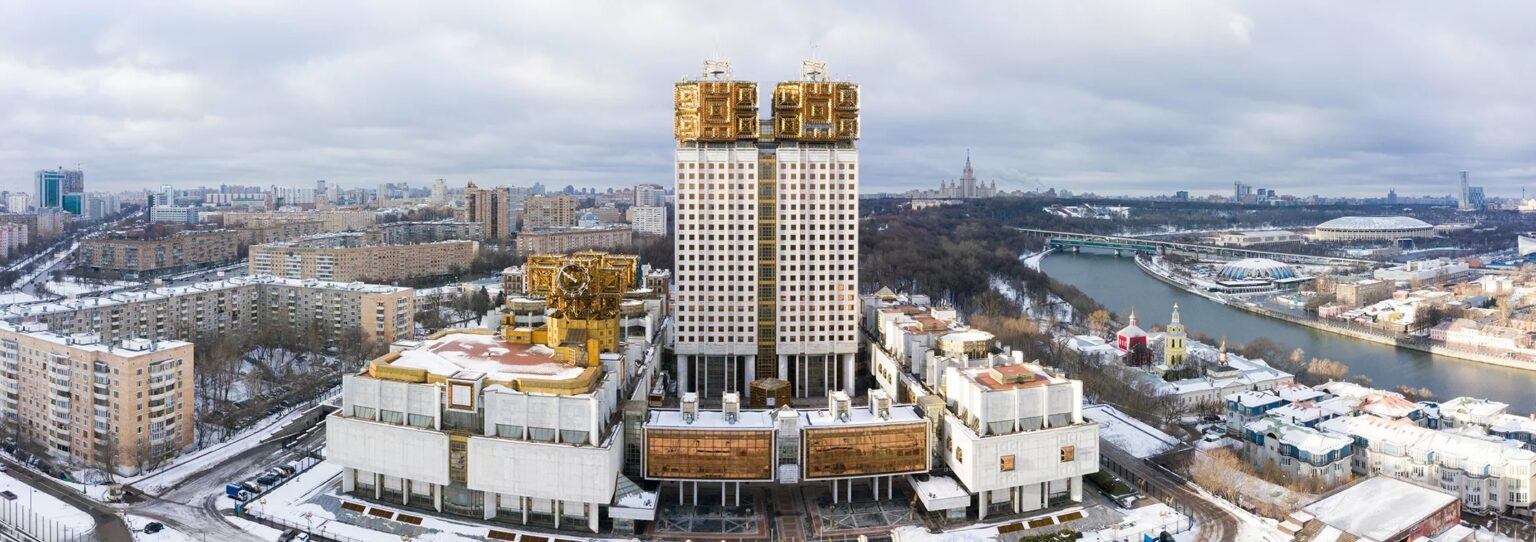
Now there are about 15,000 dissertations in Russia, about which we have already proved that this is a copywriter. Approximately the same amount is used in the process of proof and registration. And these are only those that represent large-scale plagiarism. There are even more of those where an idea or several key pages were stolen.
This is beneficial for science crooks. They run institutes where half of the scientists bought their work – and in fact, they are dead souls, not scientists. But there are many of them. This means that you can get serious government funding for them. And it is completely unprofitable for ordinary people who are treated by fake doctors of medical sciences, who are judged by fake (and therefore obedient to the state) judges and prosecutors.
How does this practically happen? My friends and I have created a computer database that stores all scientific papers written in the last 20 years. When a new dissertation is run through it, it returns the result: this is plagiarism. All dissertations that are currently being submitted to the Higher Attestation Commission are included in our program.
What is “pseudoscientific forensic examination”? A recent example is the story of Zhenya Berkovich and Sveta Petriychuk. They were told to prove that their play “Finist Yasny Sokol” is a veiled call to extremism. The linguist involved issues an opinion (conditionally): “Textbook Z says that a finger raised in the air is a secret sign of terrorists. And in this play, everyone is holding their thumbs up, there is a call to terrorism.” Dissernet digs up this textbook, and it turns out that nothing like this is written there. And reports it.
How did you feel when another fake scientist was stripped of his degree? Nothing personal. No schadenfreude. This is interesting for me from the point of view of creating a sociological map of scientific Russia: where do such “scientists” nest? What will happen to this “nest”? I myself was dismissed from the Institute of Theoretical and Experimental Physics in 2013, due to global differences in views on science (and politics) with the new head of ITEF and the Kurchatov Institute, Mikhail Kovalchuk. At the same time, we came up with a “Dissernet”. Ahead of the question: no, Dissernet is not funded by anyone. This is a volunteer community. Small donations helped us create a website and pay for the work of lawyers and technical staff. We do crowdfunding to support the server and data warehouse. That’s all.
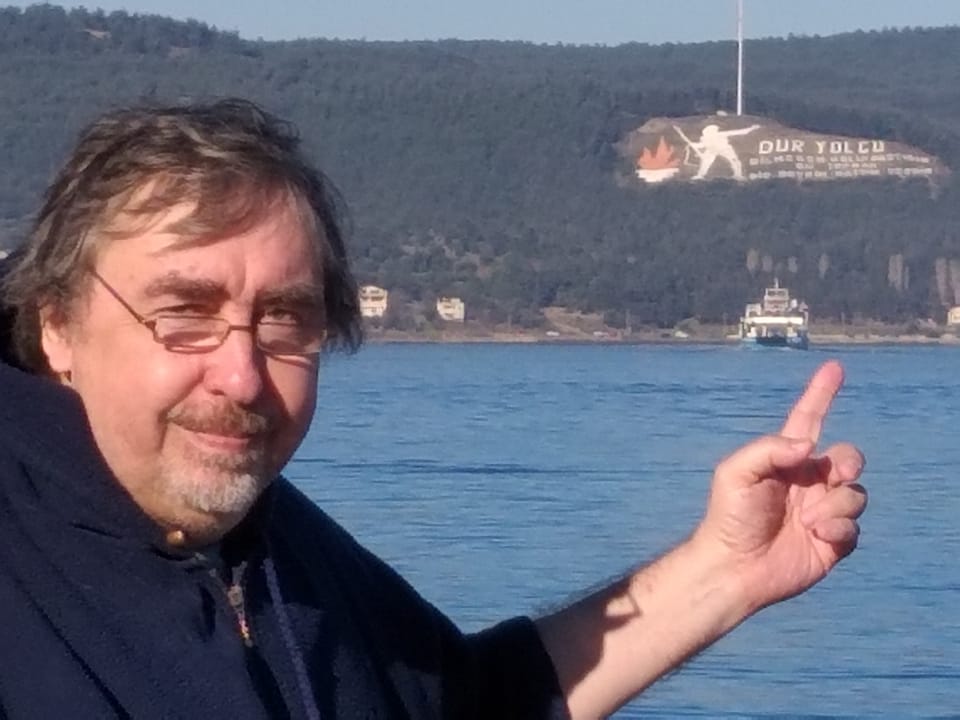
What did you do on February 24, 2022? I was in Turkey, on a trip. I read the Internet and was taken aback. I thought it was impossible, it wouldn’t last long. I was sure that the “orderlies” would come and take Putin away. I’ve been waking up every two hours for several weeks, monitoring the news: haven’t they cleaned it up yet? But the paramedics never came. I don’t wake up now.
I’ve been trying to continue doing something in Russia for a long time. After all, we were getting somewhere. For example, the absurd forensic examination in the Berkovich-Petreychuk case was canceled. From Montenegro, it would have been more difficult to do this: you would have had to meet and talk with academics in person, collect their signatures. When I’m here, there’s nothing I can do. There – something could.
And yet they left? Yes, because there was a real threat. In general, I am used to threats: in 2016, comrades who were dissatisfied with Dissernet’s investigations shot at my Moscow window. I wasn’t hit. Then I moved to live in the country. Now… well, now they could have been hit.
Everything was resolved within 3 days. I found out that there is a Pristaniste in Montenegro, where you can stay for two weeks, look around. It is very good that there is a Pristaniste. And not only because it gave me a roof over my head personally.
Friends, colleagues, daughters, cats, home. Crossing the border was unsettling. I went through customs and sent everyone a picture: everything is OK, sleep well. I arrived with only one backpack, and there was a computer in it. I was lucky: I rented an apartment in Budva, I look at the sea in the morning. I’m learning a language and working.
I’m enjoying the warm February. I sometimes conduct master classes for Pristanište: I talk about the Dissernet, about the Physics of Wine. Good people come. I do what I like without thinking ahead.
There were a lot of losses in my previous life, and I learned to treat them philosophically. But I will return to Russia.
When? When the vector changes. When the legislation is rewritten again. When the war ends and the government changes. It will happen, absolutely.”