

As a child, I dreamed of becoming a film projectionist. My father was a projectionist, and it seemed to me the coolest job in the world. He worked in the projection booth — more precisely, in a “club-car.” The club-car traveled along the Prydniprovska railway, stopping in villages where there was no cinema, bringing culture to people. I would travel with my father and sell tickets for the screenings.
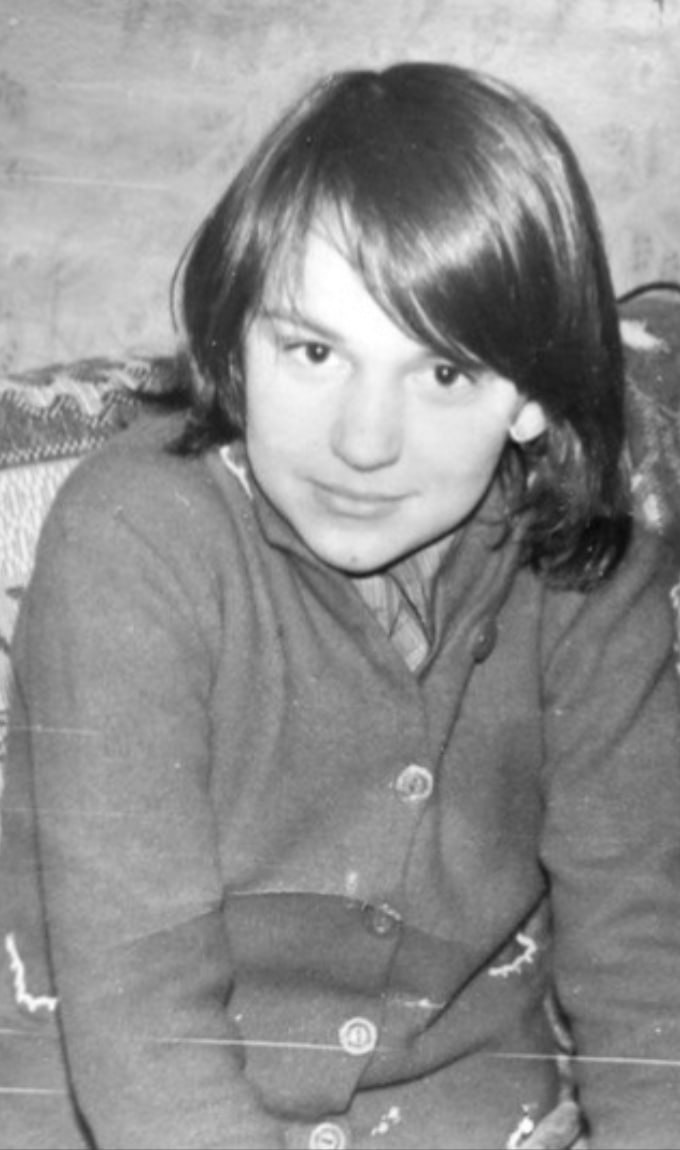
I watched Disco Dancer about 40 times. I even wanted to write a letter to handsome Mithun Chakraborty, who played the lead role, but was stopped by my lack of Hindi. When I wasn’t traveling with my father through the villages, I collected Colorado beetles in a jar, made earrings out of wire, and, putting them on my ears, waved from the platform to passing trains. At that time, we lived right at the railway station.
If someone had told me then that I would become a “foreign agent and criminal,” I would have thought aliens had landed in our Piatykhatky district.
I also wrote poetry — mostly epigrams about teachers and love lyrics.
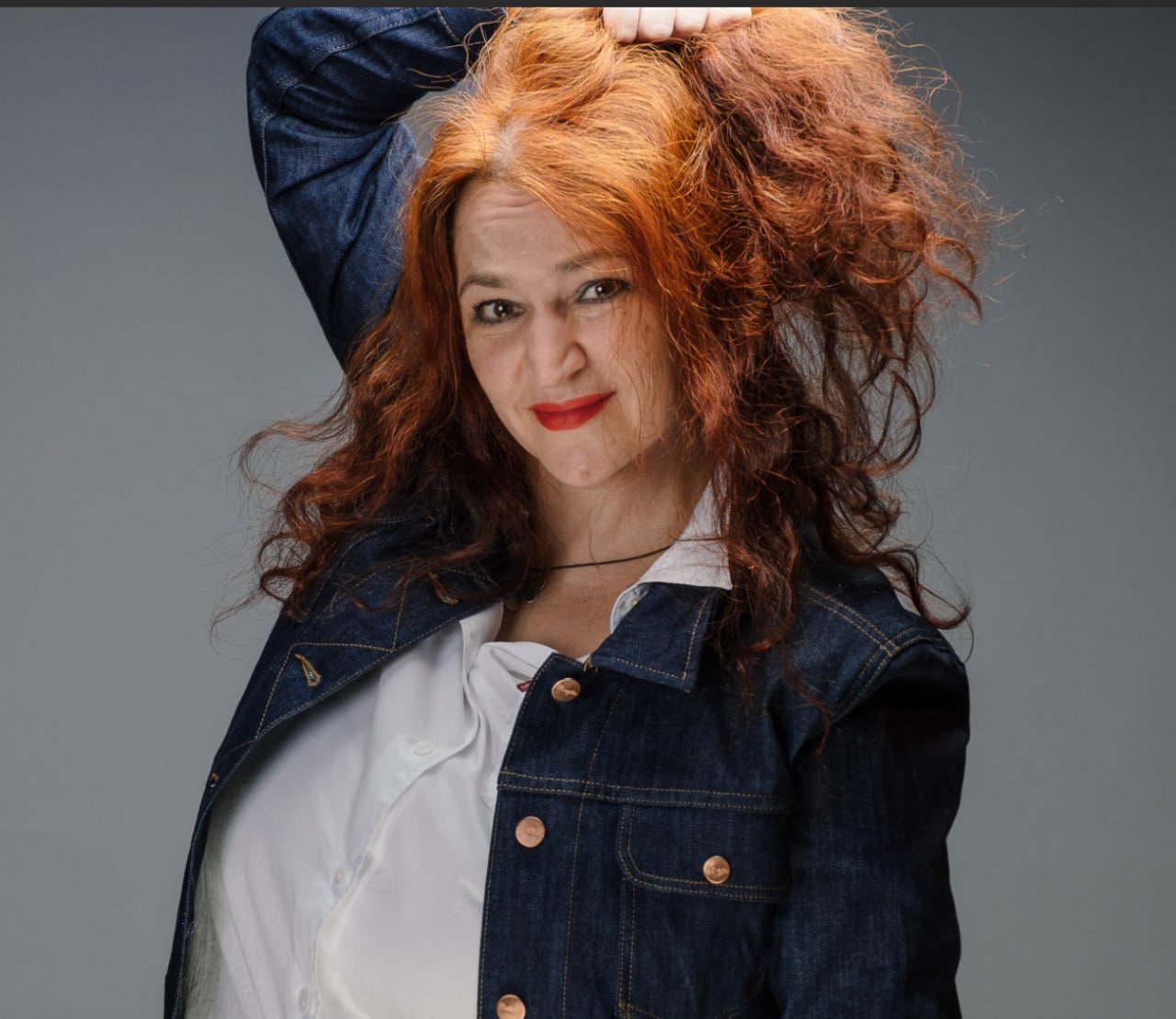
When I liked a boy, I never hid my feelings: “Pasha, I love you, here’s a poem for you.” The boys, of course, got scared and ran away. Already in Petrozavodsk, while finishing school, I heard about the Gorky Literary Institute — you could apply there by submitting your works to a competition. I typed up some poems on a typewriter — and got in. Only later did I find out that the competition was 650 people per place.
I moved to Moscow. And there — came love.
In my second year, I gave birth to a son, returned to Petrozavodsk, got a job at a newspaper — and I liked being a journalist so much that I never finished the Literary Institute. It was already 1993, you could write about anything, and the newspaper was good. I enjoyed it.
Twenty-five years later — after “Crimea is Ours,” but still before the start of serious repressions — I was fired because of a Facebook post. The post was satirical, dedicated to the press secretary of then-Governor of Karelia Alexander Khudilainen. She delivered speeches that were too fiery and out of place, saying how he “doesn’t sleep, always thinks about the people.” The text came out funny, the whole city was quoting it. The bosses demanded that I delete the post. I refused. And I was (only) fired. Vegetarian times, as we now understand.
The most important thing I did in Petrozavodsk was “Rassadnik Kultury” — the Agriculture_Club.
We started it together with a wonderful woman, later she moved on to her own projects, and I stayed with Rassadnik. We organized seminars, discussions, even a film club (you could say my dream of becoming a projectionist finally came true). We hosted lectures by Ivan Golunov, Kirill Martynov, Anna Vilenskaya.
When Boris Nemtsov was murdered, we screened Kara-Murza’s film Nemtsov. When Dmitriev was imprisoned, we organized a presentation of his book, collected signatures, joined pickets. Rassadnik Kultury was not a political club, it was a seedbed of freedom. A place where you could express your thoughts without fear.
Rassadnik Kultury was not a political club, it was a seedbed of freedom. A place where you could express your thoughts without fear.
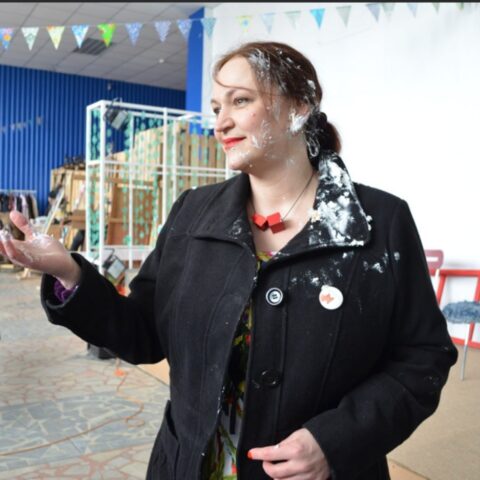
We also supported queer people. In 2016, someone threw a cake at me for that — and the photo of my face in the cake made it into Yandex’s trending top. We were about to host a lecture by psychiatrist Viktor Lebedev — about how homosexuality is not an illness, that you can’t “turn” someone gay, and you can’t “cure” it either.
Right before the lecture, Cossacks lined up outside the building, and local TV arrived. They set up a camera, as if expecting something. The reporter was someone I knew. I asked: “What are you doing here?” He said: “Oh, nothing, just here to film.” And then, out of the corner of my eye, I saw a cake flying toward me. I dodged, and it hit just my ear. Obviously, the whole thing had been planned — and the TV people knew about it. They kept replaying the footage endlessly, saying that “Sevets-Yermolina is teaching young people to join the ranks of gays and lesbians.”
But the lecture still went ahead.
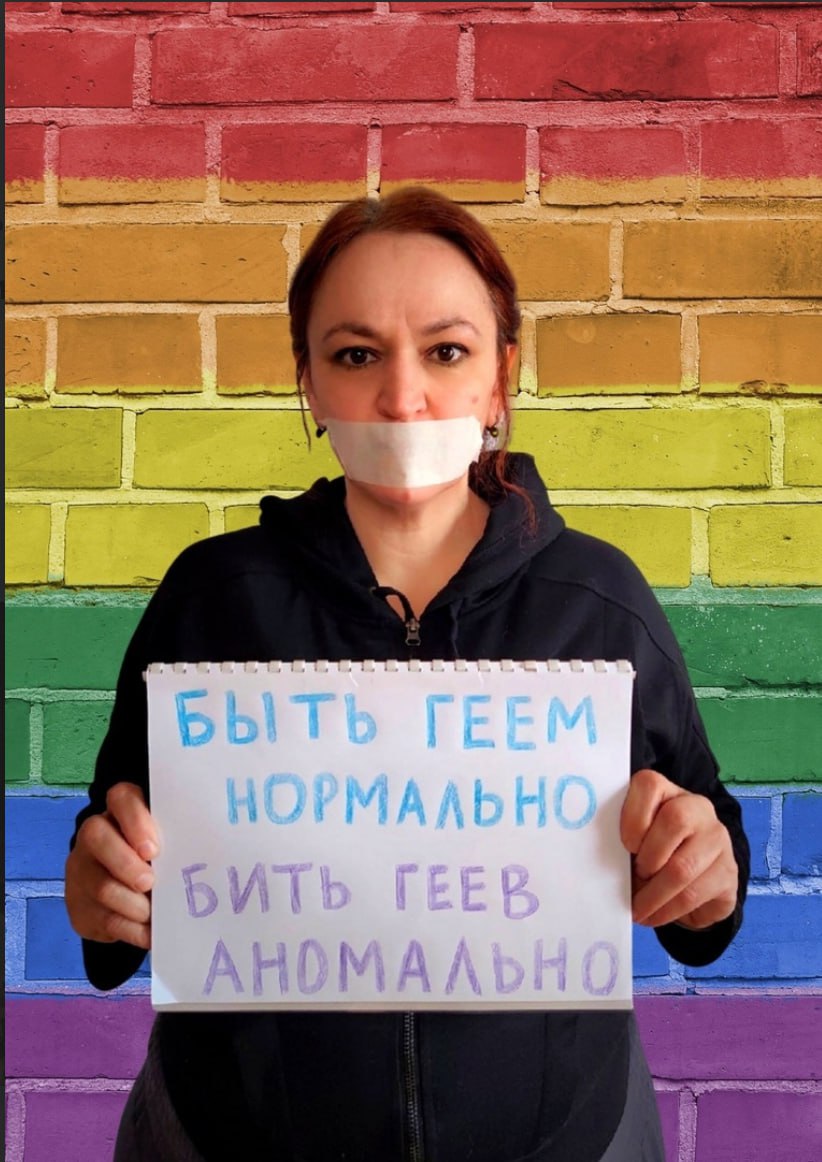
Every year on April 26, Lesbian Visibility Day, I would write a post: “I’m Natasha, and I’m a lesbian.” And people would lose it. Many, of course, never read past the headline — immediately: “Well, we knew it all along!” Even though the whole city knew I was married to a cool rock musician, and that all my partners had been men. Still — “we knew it all along!” But for me, it was a post of support for LGBT people. You don’t have to be a lesbian to support them. That’s how I became “LGBT+” — without really having any grounds for it, in essence.
Overall, I lived with joy. I did what I loved and never thought there would be a war. I thought, well, maybe they’ll pressure us a bit more, throw a cake, someone will write a complaint. I thought about how to deal with that. But when the war began, it became clear — there’s no way to deal with it. On February 24, 2022, we posted an anti-war statement on the club’s VKontakte page. And they started intimidating us. Supposed “friends” would come up, never starting the conversation inside the club (I suspect it had been bugged in recent years), but would take me outside, into a park: “Natasha, I was asked to tell you — delete the post and don’t write anything like that again. Otherwise they’ll jail you, jail your team, shut down the club.”
So I deleted it. Not for myself — for the team and for the people who came to our club. But people remembered that post anyway, and they thanked me for it. It mattered to everyone to feel that they weren’t alone against this madness.
In the first half of 2022, a small, quiet underground formed inside our Rassadnik Kultury. People would come as if for a film screening, then discussions would start, and afterward, only the trusted ones stayed — and all we talked about was the war. At some point it no longer mattered what the official event was. What mattered was that you could come and be with your own. People would say: “Can I cry?” — and they cried. And then they did whatever they could. They drew pacifist symbols, wrote “No to War” on fences, smashed Z-lightboxes, put up leaflets. And I wasn’t planning to leave. Maybe I would have ended up in prison, but I understood that here, in Petrozavodsk, people were holding on to me like to a straw. (If you can, of course, call my 100 kilos a straw.)
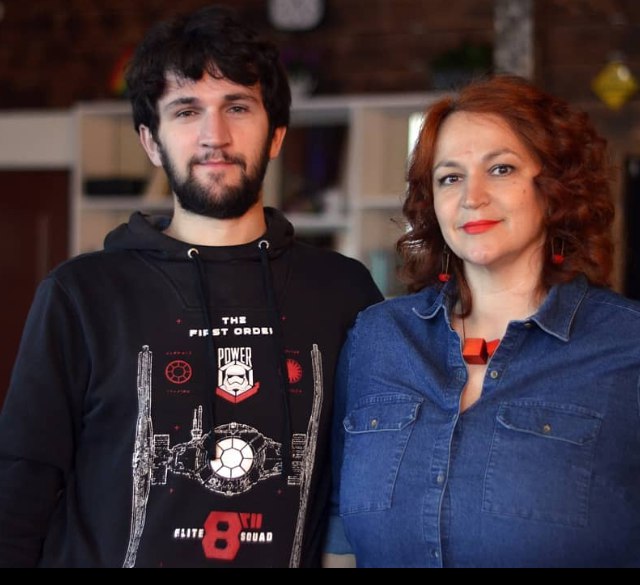
I left because of the mobilization. I have an only son. We made the decision in just one day. We didn’t own an apartment — we lived in a rented one — so packing up was, in a way, easy. Petrozavodsk → St. Petersburg → Kazan → Tashkent → Istanbul → Montenegro. That was the route my son took to evacuate from Russia, and then I followed him. Each stage lasted only as long as it took to find money for the next ticket.
On November 8, 2022, the day I landed in Montenegro, my first trial was held in Russia. After that, they filed all sorts of new protocols against me — I deleted my Gosuslugi account and stopped keeping track. On April 21, 2023, I was officially declared a “foreign agent.” The official wording: “For supporting Ukraine.”
The news about being labeled a “foreign agent” — if I try to put it without any romantic flair — well, no, there’s no way to avoid the flair. Of course, my contribution — or my “harm” — to the state is nothing compared to the “harm” done to the system by opposition politicians or anti-war artists. I think there was simply a quota in Petrozavodsk: find someone and designate them a foreign agent. And I’m hard to miss — I’m big and loud.
But in no version of my past life could I have imagined that I’d end up on the same bench as Shulman, Yashin, Dud, Grebenshchikov. For a girl who once dreamed of becoming a film projectionist, being in that company is pretty cool. And the official wording — “for supporting Ukraine” — is, in fact, even fair.
After coming to Montenegro from Russia — where people were being detained for blue-and-yellow manicures — I dressed myself in those colors, buying up everything I could at Ukrainian festivals, from bracelets to bags. And when I was offered the position of SMM manager at Pristanište, the deciding factor was that this foundation is about Ukrainians and about helping them.
Learning Montenegrin has become a kind of point of no return to Russia. I’m investing in the language because I plan to live here. I study it everywhere, even out on my balcony. Down below, there’s always a gang of boys hanging out. All day long it’s like a language lab: “Viktore! Todore! Ajde!” Pure joy. And when someone tells you a joke in Montenegrin and you actually get it — it’s absolute delight.
I grew up in Ukraine, and I still understand Ukrainian at a basic level. If you layer Montenegrin on top of Ukrainian and Russian, it feels like a puzzle has clicked into place, with all the words and meanings fitting together.
And it’s amazing that there are so many Karelians here. When you leave across “five seas” and still end up next to people you’ve known for years, it gives incredible support. It feels as if you’ve left all the bad behind, but carried all the good with you. Every weekend we have breakfasts with the “MonteKarelians,” as we call ourselves. I never used to like eating breakfast early in the morning — but now I do.
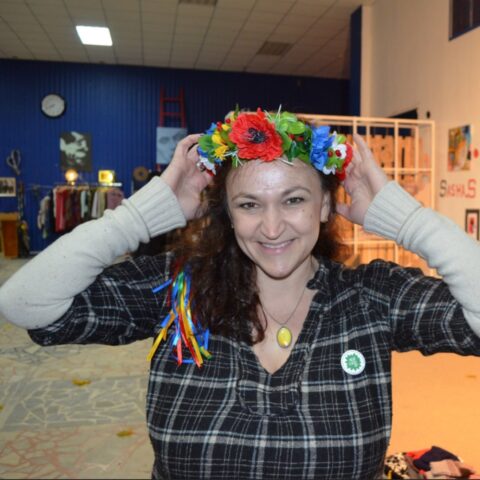
But there are still many good people left in my Karelia. I don’t know all of them by name, but I know them all by face — they came to our club. Sometimes I dream: the door opens, someone comes in — “Can I cry?” — but there’s no one to cry with. Still, I try not to leave them alone.
In Petrozavodsk, I had a project called “100 Kilograms of Beauty” — fitness for plus-size people. For those whose favorite exercise is “Lie Down and Lie.” Now we stretch, squat with sticks, and shake our hips over video calls. Most of them are retired, and all of them are against the war. Without these sessions, what would they even do?
So — we shake our hips against Putin. And I’m sure we’ll keep shaking until something changes.
Interview recorded by